Anorexia, or aruci in Ayurveda, is a chronic disorder marked by loss of appetite,
malnourishment, and impaired digestion. Amalakyadi Churna, a classical polyherbal
formulation containing Amalaki, Citraka, Pathy?, Pippal?, and Saindhavalava?a, has
traditionally been used to stimulate digestive fire (Agni) and restore appetite. To explore its
molecular basis, network pharmacology and molecular docking approaches were employed.
Ten lead phytoconstituents were identified through ADME screening, all showing drug-
likeness and favorable bioavailability. Target mapping revealed 33 overlapping genes between
these compounds and anorexia-related genes, with hub genes including AKT1, EGFR, SRC,
and MMP9. Functional enrichment highlighted significant involvement in the PI3K-AKT
signaling pathway and cellular responses to oxidative stress, both critical in appetite regulation
and metabolic balance. KEGG pathway analysis further indicated enrichment in endocrine
resistance, VEGF signaling, and EGFR tyrosine kinase inhibitor resistance, suggesting broad
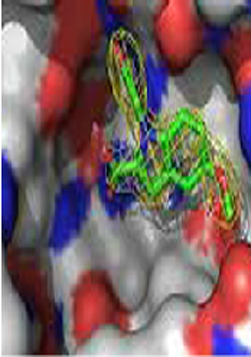
regulatory effects. Molecular docking confirmed strong binding affinities, particularly
quercetin from Phyllanthus emblica, which showed notable interaction with AKT1 (Vina score
-8.8 kcal/mol). These interactions support modulation of appetite-related signaling pathways.Overall, this study provides mechanistic insights into the polypharmacological effects of
Amalakyadi Churna, validating its traditional use in treating aruci and highlighting its potential
as a multi-target therapeutic approach for appetite disorders.
Keywords: Amalakyadi Churna, Aruci, Anorexia, Network Pharmacology, Molecular Docking,
AKT1, PI3K-AKT signaling, Appetite Regulation, Ayurveda, Quercetin
Publication date: 2026/10/01
https://www.ijbpas.com/pdf/2026/October/MS_IJBPAS_2026_10542.pdf
Download PDF
doi.org/10.31032/IJBPAS/2026/15.10.10542