Background: Cirrhosis, hepatocellular carcinoma, and chronic hepatitis are all linked to
hepatitis B virus (HBV) infection, which continues to be a serious global health concern.
Antiviral treatments are available, however long-term use is linked to side effects and
medication resistance. Though their molecular mechanism against HBV is yet unknown,
Feronia limonia leaves (Kapittha patra), which have long been employed in traditional
medicine for liver problems, have hepatoprotective effect. The current study used network
pharmacology and molecular docking techniques to assess the possible protective effect of
Feronia limonia leaves against Hepatitis B.
Methods: IMPPAT and Dr. Duke's databases were used to gather phytochemicals associated
with Feronia limonia leaves. ADMETlab 3.0 was used for ADMET screening, and
SwissTargetPrediction was used for target prediction. GeneCards and the Human Protein Atlas
databases provided targets associated with hepatitis B. Venny 2.1.0 was used to identify
common targets, and Cytoscape and STRING were used to analyze protein–protein
interactions. DAVID Bioinformatics resources were used to perform KEGG pathway
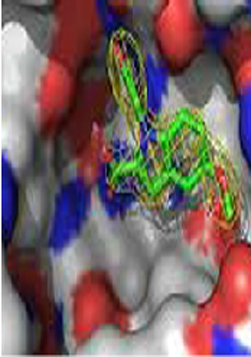
enrichment. PyRx was used to perform molecular docking on certain phytochemicals, and
Discovery Studio was used to show the results. Result: 20 of the 72 phytochemicals found met ADMET requirements. Hepatitis B and
phytochemicals were shown to have 36 targets in total. STAT3, EGFR, TNF, ALB, MMP9,
SRC, AKT1, and BCL2 were among the hub targets. Significant enrichment in the "Pathways
in Cancer" and "Hepatitis B" pathways was found by KEGG analysis. Psoralen, spathulenol,
and myristicin showed good binding affinities for HBV-related targets, especially STAT3,
according to molecular docking. The strongest binding affinity against STAT3 was shown by
psoralen (?7.9 kcal/mol).
Conclusion: Feronia limonia leaves may have anti-Hepatitis B properties by modifying viral
and inflammatory signaling pathways that involve TNF and STAT3. These results call for
more experimental and clinical confirmation and offer scientific backing for the traditional
usage of Kapittha in liver problems.
Keywords: Kapittha, Hepatitis B, Computational pharmacology, Molecular docking
Publication date: 01/12/2026
https://www.ijbpas.com/pdf/2026/December/MS_IJBPAS_2026_10641.pdf
Download PDF
https://doi.org/10.31032/IJBPAS/2026/15.12.10641