Aim: The present study aimed to explore the phytochemical composition and in vitro anti-inflammatory
potential of the methanolic root extract of Moringa oleifera, providing scientific validation for its traditional
medicinal applications. Methodology: Roots of Moringa oleifera were collected, authenticated, and
subjected to cold maceration using methanol. Preliminary phytochemical screening was conducted to detect
bioactive constituents, including alkaloids, flavonoids, phenols, glycosides, tannins, saponins, and
terpenoids. Major compounds were characterized through Gas Chromatography–Mass Spectrometry (GC-
MS) analysis. The anti-inflammatory activity was evaluated in vitro employing the Albumin Denaturation
Inhibition assay at concentrations ranging from 31.25 to 1000 ?g/mL, with paracetamol as the reference
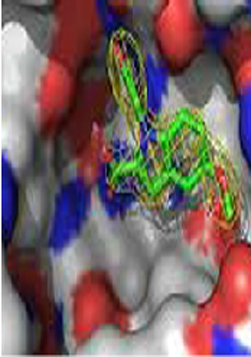
standard. Percentage inhibition of protein denaturation was calculated. Molecular docking using AutoDock
Vina and Biovia Discovery Studio revealed strong binding interactions between Moringa oleifera
phytoconstituents and cyclooxygenase-II (COX-2; PDB ID: 4COX), a key enzyme involved in
inflammation. Results: Phytochemical evaluation confirmed the presence of alkaloids, flavonoids, phenols,
glycosides, tannins, and saponins, while terpenoids were absent. GC-MS profiling identified several
bioactive constituents, including Methanone, (1-hydroxycyclohexyl) phenyl, 2-Propenoic acid, 1,7,7-
trimethylbicyclo[2.2.1]hept-2-yl ester, 1,2-bis(trimethylsilyloxy-2-(3'-trimethylsilyloxyphenyl) ethanone.
The extract exhibited dose-dependent anti-inflammatory activity, achieving a maximum inhibition of88.04% at 1000 ?g/mL. Paracetamol showed higher inhibition (97.06%), yet the extract demonstrated
appreciable activity at elevated concentrations. Among the compounds, 2-Propenoic acid derivative (?8.7
kcal/mol), Methanone derivative (?8.6 kcal/mol), and a trimethylsilyloxy ethanone derivative (?8.5
kcal/mol) exhibited high binding affinity, comparable to the reference ligand (?9.1 kcal/mol). Conclusion:
The methanolic root extract of Moringa oleifera possesses significant phytochemical diversity and in vitro
anti-inflammatory activity.
Keywords: Moringa oleifera, phytochemicals, GC-MS, anti-inflammatory, albumin denaturation
Publication date: 01/12/2026
https://www.ijbpas.com/pdf/2026/December/MS_IJBPAS_2026_10684.pdf
Download PDF
https://doi.org/10.31032/IJBPAS/2026/15.12.10684